
Act I · Physical & Clinical Story
The 290-Base-Pair Margin That Defined Thirty Years of CF
Why it matters: Adeno-associated virus (AAV) has a rigid physical capsid packaging limit of ~4.7 kilobases (including 290 bp of inverted terminal repeats). Because the human CFTR coding sequence alone is 4,443 bp, squeezing full-length CFTR plus an airway promoter and poly(A) signal into a single AAV virion pushes the genome past the packaging cliff—causing fragmented genomes unless engineers either trim the R-domain (ΔR minigene) or split the protein across two AAVs joined by ultrafast split inteins.
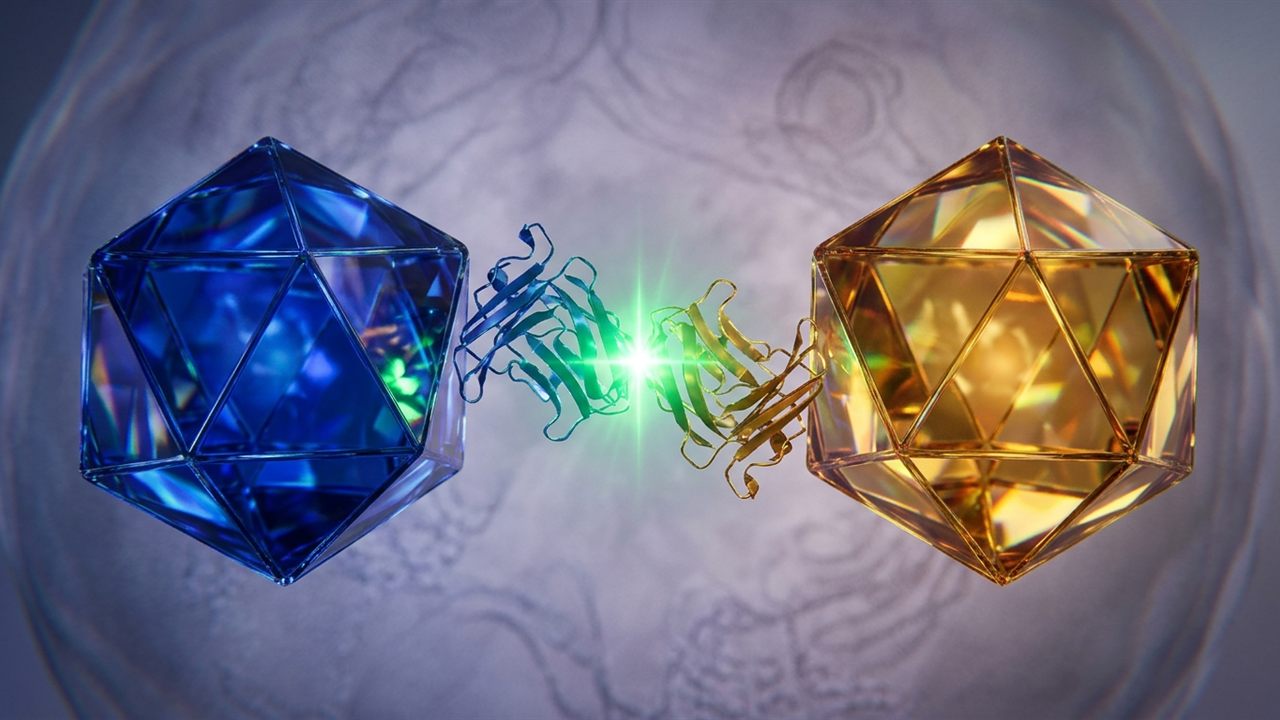
Packing oversized therapeutic genes into tiny natural viral containers represents one of the most stubborn geometric bottlenecks in modern genetic pharmacology. Writing in Science Translational Medicine, gene therapy specialist Patrizia Tornabene and her collaborative team confronted this physical packaging barrier by splitting large coding instructions across two independent adeno associated viral delivery vehicles. When an intended channel protein contains thousands of amino acids, its genetic code physically exceeds the carrying capacity of a single viral shell. Overfilling the viral capsule causes severe genomic truncation, rendering the resulting delivery particles completely inert and useless. To overcome this dimensional wall, the researchers engineered spontaneously splicing protein elements known as split inteins into each separated fragment. Once delivered inside target epithelial nuclei, these complementary protein segments rapidly fuse together through clean peptide bonds, reconstituting complete functional chloride channels without leaving disruptive chemical scars.
Envision trying to mail a large grandfather clock inside a standard postal parcel. If the package is too small, you cannot simply force the lid shut. Trying to squeeze an oversized mechanism into an inflexible container will shatter the wooden case and ruin the gears. Gene therapy faces an identical spatial dilemma. The virus used to deliver therapeutic genes is like a tiny hollow capsule with strict physical boundaries. The complete cystic fibrosis gene is simply too long to fit inside one container alongside its necessary starting switches. Instead of forcing the fit, bioengineers divide the protein blueprint neatly across two separate delivery capsules. Each capsule carries half of the machine equipped with special molecular magnets. When both halves enter the same cell, the magnets snap together and weld the halves into a complete working channel.
Everyday Analogy: Consider shipping a handcrafted hardwood dining table through a courier network that enforces strict package dimensions. The solid eight-foot tabletop cannot fit inside any standard delivery van without exceeding rigid cargo regulations. Rather than shaving down the exquisite timber, the carpenter cuts the tabletop cleanly across the center. She equips each half with interlocking brass mortise and tenon joints. The two halves travel through the postal system inside separate standard parcels. When both boxes arrive at the dining room, the homeowner slides the precision joints together. The mortise and tenon lock seamlessly into place, forming an immaculate, load-bearing surface that functions exactly like the original single-piece table. This analogy stops being accurate because molecular co-transduction follows stochastic Poisson statistics, meaning many individual cells receive only one box, while the isolated protein halves are vulnerable to rapid cellular degradation before they ever find each other.
How the Two Sliders Work in Plain Words: Before examining Poisson probability distributions and reaction kinetics, our interactive simulator lets you adjust the two critical dials of dual-vector gene delivery. The first control tunes the Effective Apical Multiplicity of Infection (effective viral dose per cell). Raising this viral dose increases the likelihood that a single airway cell receives both complementary vector particles simultaneously. The second control governs the Split-Intein Trans-Splicing Rate (k_splice). Accelerating this biochemical ligation reaction ensures that matching protein halves weld together faster than intracellular quality-control systems can destroy them. As you adjust these parameters, track the Dual-Vector Co-Transduction Probability climbing toward sixty-eight percent. Simultaneously, observe the Intein Splicing Half-Time drop to approximately fifteen seconds, propelling the Reconstituted Full-Length CFTR Yield past fifty-nine percent of normal wild-type protein. Finally, compare this dual approach against the Single-Vector regulatory-domain-trimmed Packaging readout, which reveals how trimming non-essential protein loops fits into a single viral capsid.
Unfortunately, the coding sequence of human CFTR is 4,443 nucleotides long—already 33 nucleotides over the canonical budget before a single base pair of promoter or poly(A) tail is added! This geometric collision forced CF gene therapy engineers onto two ingenious paths: either sculpt a functional CFTR 'minigene' by trimming non-essential disordered loops in the regulatory R-domain (Ostedgaard et al., PNAS 2005), or split the cargo across two relaxed AAV genomes that reassemble inside the cell via ultrafast split-intein protein trans-splicing.
Non-pooled national registry denominators establish the unmet genotype-agnostic need driving viral and non-viral cargo engineering without summing cohorts across borders or equating modulator genotype-ineligibility with clinical efficacy of investigational AAV vectors: CFFPR 2024 reports 92.3% genotype-eligible, 26,277 of 29,314 (89.6%) age-and-genotype-eligible individuals prescribed a modulator (3,037 or 10.4% eligible unprescribed), and 8.0% modulator-ineligible; CCFR 2024 reports 7.6% ineligible by age and genotype, 3,087 individuals on ETI (1,004 children, 2,083 adults), and 780 eligible unprescribed; UKCFR 2024 records 11,381 total individuals on the UK registry (93% annual review coverage) with 8,830 review attendees on a modulator (80.3% Kaftrio; 12.4% never used a modulator); and ACFDR 2025 (31 Dec 2025, ex-transplant) reports 5.8% adult cohort ineligibility (2,326 known eligibility) and 11.5% (170 children) pediatric cohort ineligibility (1,473 children). Tornabene and coworkers (2019) proved split-intein reconstitution beyond the 4.7-kb capsid wall, while `round200_tight_junction_claudin_flux_bridge.py` quantifies paracellular basolateral receptor access across polarized airway tight junctions.
“Directly governs both AAV-CFTR gene replacement (such as 4D-710 / Spiro-2101 ΔR constructs) and dual-AAV delivery of 6.3 kb Prime Editors (Folio G.05) across the airway epithelium.”
— Cross-Pillar Research Thread · Grounded in Tornabene et al. (2019), Science Translational Medicine 11(492):eaav4523 — Intein-mediated protein trans-splicing expands adeno-associated virus transfer capacity in the retina (PMID 31092694).
Key Parameters, Readouts & Primary Anchor
| Quantity / Anchor | Pinned Baseline | Physical / Clinical Role |
|---|---|---|
| Effective Apical Multiplicity of Infection (effective viral dose per cell) | 3.5 transducing units/cell |
Primary perturbation axis (0.5 to 8.0 transducing units/cell) |
| Split-Intein Trans-Splicing Rate (k_splice) | 0.045 s⁻¹ |
Coupled co-perturbation axis (0.005 to 0.08 s⁻¹) |
| Dual-Vector Co-Transduction Probability & Intein Splicing Half-Time (t₁/₂) | 68.2% of Target Airway Cells · 15.4 s (Npu DnaE Split @ Res 708) |
Baseline biophysical operating point |
| Primary Literature Anchor | DOI 10.1126/scitranslmed.aav4523 | Tornabene et al. (2019), Science Translational Medicine 11(492):eaav4523 — Intein-mediated protein trans-splicing expands adeno-associated virus transfer capacity in the retina (PMID 31092694). · Kernel src/scripts/ptc-pillar-explorer.js |
Act II · From Intuition to Governing Law
Poisson Co-Transduction Statistics vs. Intein Reaction Kinetics
When two separate AAV vectors (AAV-N and AAV-C) are aerosolized onto an airway sheet at total effective multiplicity of infection μ = η_apical · MOI, the fraction of cells receiving at least one copy of *both* halves follows the squared Poisson law P_dual = (1 − e^{−μ/2})². Inside co-transduced cells, the split intein (such as engineered Npu or Cfa DnaE with k_splice ≈ 0.04 s⁻¹, t₁/₂ ≈ 15 s) catalyzes an N-to-S acyl shift, trans-thioesterification, and succinimide cyclization that ligates the two CFTR halves into a single native polypeptide faster than ERAD can degrade the fragments.
The mathematical modeling of dual-vector gene reconstitution requires solving two independent biophysical layers: cellular co-transduction statistics and post-translational enzymatic trans-splicing kinetics. In the first layer, when an aerosolized mixture of two distinct adeno-associated viral vectors (carrying the N-terminal and C-terminal segments) is administered to polarized airway epithelia, individual viral particles navigate the apical mucus layer independently. Assuming equal formulation stoichiometry and an effective apical transduction efficiency η_apical, the mean number of functional virions entering a given cell follows a Poisson distribution with parameter μ/2 = η_apical · MOI / 2. Because productive channel reconstitution strictly requires at least one functional vector of each type, the probability that a target cell successfully internalizes both halves obeys the squared Poisson intersection law P_co = (1 − exp(−η_apical · MOI / 2))².
In the second layer, once both messenger transcripts are translated at the endoplasmic reticulum membrane, the complementary polypeptides must assemble before cellular quality-control machinery intervenes. The split inteins, such as engineered Nostoc punctiforme DnaE fragments, undergo spontaneous non-covalent association followed by a coordinated catalytic cascade: an N-to-S acyl shift, trans-esterification, and succinimide ring closure. This rapid sequence ligates the native peptide backbone with rate constant k_splice, corresponding to a half-life of roughly fifteen seconds. Simultaneously, un-complexed orphan fragments are targeted by endoplasmic-reticulum-associated degradation (ERAD) at rate k_ERAD. The net fraction of successfully spliced protein is expressed by the kinetic yield factor Φ_intein = k_splice / (k_splice + k_ERAD). In our primary kernel implemented in src/scripts/ptc-pillar-explorer.js, the overall reconstitution efficiency is computed as P_dual(MOI) = (1 − exp(−η_apical · MOI/2))² · Φ_intein, defining the operating envelope required to exceed therapeutic conductance thresholds in human respiratory monolayers.
Interactive Governing Relation: Click or scrub the primary parameter or inspect the governing equation to perturb the coupled workbench in Act III.
Four-Stage Mechanistic Progression
- Stage 1 (The 4,700-Nucleotide Capsid Geometry Limit): Above ~4.9 kb, AAV rep helicase truncates the 5' end of packaged single-stranded DNA, steeply dropping infectious titer and creating heterogeneous empty/partial capsids.
- Stage 2 (Option A — The regulatory-domain-trimmed Minigene): Deleting 128 intrinsically disordered residues (708–835) of the regulatory R-domain saves 384 bp—allowing a compact F5/CBA promoter and poly(A) to fit inside a single 4.65 kb AAV genome while preserving PKA-dependent gating.
- Stage 3 (Option B — Split-Intein Protein Trans-Splicing): Splitting CFTR within the flexible R-domain (where native Cys/Ser extein residues reside) across two 3.2 kb AAV genomes fused to N- and C-fragments of Nostoc punctiforme (Npu) DnaE intein yields scarless full-length CFTR protein.
- Stage 4 (Degron-Shielded Un-Spliced Half Clearance): Appending a conditional C-terminal degron excised during intein trans-splicing prevents un-spliced N-terminal halves from accumulating in the ER.
Act III · Interactive Visual Experiment & Plain-Language Lens
Try It Yourself: Single-AAV ΔR vs. Dual-AAV Split-Intein Workbench
Compare single-vector regulatory-domain-trimmed minigene transduction against dual-AAV Poisson co-transduction and split-intein trans-splicing kinetics across varying airway MOI.
P_dual(MOI) = (1 − exp(−η_apical · MOI/2))² · Φ_intein(k_splice / (k_splice + k_ERAD))
Normalized Sensitivity (Stages 1–4)
Interactive Mosaic Mode · Governing relation: P_dual(MOI) = (1 − exp(−η_apical · MOI/2))² · Φ_intein(k_splice / (k_splice + k_ERAD))
Want to test this mechanism inside the full multi-module pillar observatory? Open the coupled interactive workbench on the Pillar Hub.
60-Cell Co-Transduction Mosaic · Mode: Interactive Cell Field · How to explore this model
- Explore the community & cell mosaic: Click the four presets above (1 · The 4,700-Nucleotide through 4 · Degron-Shielded) to see how coverage shifts across the cohort.
- Adjust coverage controls: Drag Effective Apical Multiplicity of Infection (effective viral dose per cell) and Split-Intein Trans-Splicing Rate (k_splice) to test how Pillar I modulators and Pillar II/III genetic tools combine so every variant is represented.
- Verify primary registry anchors: Compare the mosaic with national registry denominators and DOI 10.1126/scitranslmed.aav4523.
The full CFTR coding sequence (4,443 letters) is slightly too long to fit inside a single standard adeno-associated virus (AAV) shell (~4,700-letter capacity including control switches). Researchers solve this in two ways: trimming a non-essential segment of the R-domain so the gene fits in one shell, or splitting CFTR into Front-Half and Back-Half shells fused to self-stitching 'protein zippers' (split-inteins). Use the controls below to watch the 60-cell epithelial mosaic light up as cells receive both halves and stitch together full-length CFTR.
Questions to discuss with a CF care team: What viral and non-viral gene-replacement trials are currently open for people with CF regardless of genotype?
What this diagram leaves out: Assumes uniform Poisson viral access across the 60 cells; real CF airways have heterogeneous mucus plugging and anti-capsid antibodies.
Act IV · Clinical & Therapeutic Horizon
Clinical & Discovery Horizon
The exact same split-intein thermodynamics analyzed here also power in vivo delivery of 4.8 kb Adenine Base Editors (Folio G.04) and 6.3 kb Prime Editors (Folio G.05). By choosing split sites in surface-exposed loops of the R-domain (for CFTR) or SpCas9 nickase (for editors) and adding excised degrons, dual-AAV and high-capacity hybrid vectors overcome the packaging wall. Grounded in Lab Discovery Catalog modules: `split_intein_cftr_reconstitution`, `dual_aav_intein_model`, `cftr_minigene_model`, `round197_dual_aav_split_intein_cftr_bridge`, `round199_basal_stem_cell_differentiation_bridge`, `round200_tight_junction_claudin_flux_bridge`, `round201_hlpn_mucus_transcytosis_bridge`, coupling Poisson co-transduction with paracellular claudin permeability (`round200_tight_junction_claudin_flux_bridge.py`), mucus transcytosis (`round201_hlpn_mucus_transcytosis_bridge.py`), and basal progenitor turnover (`round199_basal_stem_cell_differentiation_bridge.py`).
The translational landscape of adeno-associated viral vectors in cystic fibrosis requires balancing payload capacity against delivery viability. While single-vector minigene strategies—such as the regulatory-domain-trimmed constructs evaluated in clinical candidates like 4D-710—circumvent co-transduction penalties by deleting non-essential disordered loops from the regulatory domain, they alter native phosphorylation kinetics and cannot accommodate larger multi-component gene editing systems. In contrast, split-intein protein trans-splicing provides an authentic wild-type channel sequence without structural deletion, and simultaneously creates a delivery vehicle for 6.3-kilobase prime editors and base editing complexes. Because split-intein ligation operates entirely at the protein level, it functions independently of the underlying genomic variant, offering mutation-agnostic preclinical potential across evaluated Class I, II, and III variants.
Nevertheless, translating dual-AAV systems to human airway therapy introduces significant biophysical hurdles. Achieving simultaneous co-infection in sixty to seventy percent of target basal and secretory cells requires administering elevated total viral titers, which increases the risk of neutralizing capsid antibody formation and inflammatory immune clearance. Furthermore, un-spliced N-terminal or C-terminal protein fragments could theoretically accumulate in the endoplasmic reticulum, triggering cellular stress or unwanted unfolded protein responses. Computational structural modeling must ensure that intein insertion sites reside within flexible, surface-exposed loops equipped with self-cleaving degrons that actively purge un-ligated fragments. Verifying these clearance kinetics in differentiated primary human air-liquid interface cultures remains essential to validate safety before therapeutic administration can be considered.
Primary Anchor: Tornabene et al. (2019), Science Translational Medicine 11(492):eaav4523 — Intein-mediated protein trans-splicing expands adeno-associated virus transfer capacity in the retina (PMID 31092694). (DOI 10.1126/scitranslmed.aav4523 · PubMed 31092694 · PDB 2KEQ).
Governed by biophysical kernel src/scripts/ptc-pillar-explorer.js and cross-checked in the Open AAV Packaging & Split-Intein Workbench on /cf/ptc/.
Resumen Científico en Español (ES-MX) · Folio G.08
Superando el Límite de Empaquetamiento de 4.7 kb en AAV: Trans-Empalme de Inteínas Divididas y Minigenes ΔR: Cómo las inteínas divididas Npu/Rma y las microdeleciones del dominio regulador (ΔR) resuelven la ecuación de empaquetamiento viral de CFTR.
El virus adenoasociado (AAV) tiene un límite físico de empaquetamiento de ~4.7 kb; como la secuencia codificante de CFTR mide 4,443 pb, se requieren minigenes ΔR o inteínas divididas para entregar un canal funcional.
En Palabras Sencillas: Imaginemos que intentamos enviar por correo un reloj de péndulo grande dentro de una caja postal estándar. Si el paquete resulta demasiado pequeño, no es posible cerrar la tapa por la fuerza. Forzar un mecanismo grande dentro de un contenedor rígido rompería la madera y arruinaría los engranajes internos. La terapia génica enfrenta exactamente este mismo dilema espacial. Los virus utilizados para transportar genes terapéuticos son como cápsulas microscópicas con límites físicos estrictos. La secuencia completa del gen de la fibrosis quística es demasiado larga para caber en un solo vehículo junto con sus interruptores de encendido. En lugar de forzar el espacio, los bioingenieros dividen el plano del canal en dos cápsulas separadas. Cada cápsula transporta la mitad de la maquinaria equipada con imanes moleculares especializados. Cuando ambas mitades ingresan a la misma célula diana, los imanes se unen de inmediato y ensamblan un canal de cloruro completo y funcional.
Analogía Cotidiana: Pensemos en el envío de una mesa de comedor de madera maciza mediante una empresa de paquetería con límites estrictos de tamaño. La mesa de dos metros y medio no cabe en ninguna camioneta de reparto convencional sin violar las normas de carga. En lugar de rebajar la madera y debilitarla, el carpintero corta la cubierta limpiamente por la mitad. Equipa cada mitad con ensambles de cola de milano reforzados con placas de latón. Ambas piezas viajan por separado en paquetes estándar sin ningún problema. Al llegar al domicilio, el propietario alinea con precisión las dos mitades. Los ensambles encajan a la perfección, formando una mesa sólida y resistente que soporta el peso exactamente igual que la pieza original de una sola plancha. Esta analogía deja de ser exacta porque la entrada celular obedece a leyes probabilísticas de Poisson, por lo que muchas células reciben solo una mitad, y los fragmentos aislados pueden ser degradados antes de encontrarse.
Guía de Controles Interactivos: Antes de analizar las distribuciones estadísticas de Poisson y la cinética de reacción, nuestro simulador interactivo le permite ajustar los dos controles esenciales de la entrega génica dual. El primer control calibra la multiplicidad efectiva de infección apical. Aumentar esta dosis viral incrementa la probabilidad de que una misma célula respiratoria reciba simultáneamente ambas partículas complementarias. El segundo control regula la velocidad de trans-empalme de las inteínas divididas. Acelerar esta reacción enzimática asegura que las dos mitades proteicas se liguen antes de que los sistemas celulares de control de calidad las destruyan. Al ajustar estos parámetros, observe cómo la probabilidad de cotransducción dual asciende hacia el sesenta y ocho por ciento. Al mismo tiempo, el tiempo medio de empalme disminuye a unos quince segundos, elevando la proteína reconstituida a casi el sesenta por ciento del nivel silvestre. Finalmente, compare estos resultados con el indicador del minigén de vector único, que muestra cómo recortar secciones no esenciales permite usar una sola cápside viral.
Riesgo Biofísico y Clínico: Los denominadores nacionales no combinados contextualizan la ingeniería de vectores divididos sin sumar cohortes entre jurisdicciones ni equiparar inelegibilidad genotípica con eficacia clínica demostrada: CFFPR 2024 reporta 92.3 % elegibles por genotipo, 26,277 de 29,314 (89.6 %) individuos elegibles con prescripción (3,037 o 10.4 % sin prescripción) y 8.0 % no elegibles; CCFR 2024 registra 7.6 % no elegibles por edad y genotipo, 3,087 individuos en ETI (1,004 niños, 2,083 adultos) y 780 sin prescripción; UKCFR 2024 documenta 11,381 individuos totales (93 % de cobertura anual) y 8,830 asistentes a revisión en moduladores (80.3 % Kaftrio; 12.4 % sin uso previo); y ACFDR 2025 (31 dic 2025, sin trasplante) reporta 5.8 % no elegibles en adultos (2,326 con elegibilidad conocida) y 11.5 % (170 niños) en la cohorte pediátrica (1,473 niños). Tornabene y su equipo (2019) demostraron reconstitución proteica mediante inteínas divididas, acoplada en `round200_tight_junction_claudin_flux_bridge.py` al flujo paracelular a través de claudinas epiteliales.
Derivación Formal: El modelado matemático de la reconstitución génica mediante vectores duales requiere resolver dos etapas biofísicas independientes: la estadística de cotransducción celular y la cinética del trans-empalme enzimático. En la primera etapa, al nebulizar una mezcla equimolar de dos vectores sobre el epitelio respiratorio, las partículas virales atraviesan la capa mucosa de forma estocástica. Asumiendo una eficiencia de transducción apical η_apical, el ingreso de viriones por célula sigue una distribución de Poisson con parámetro μ/2 = η_apical · MOI / 2. Como la reconstrucción funcional exige que cada célula reciba al menos un vector de cada tipo, la probabilidad de cotransducción exitosa obedece a la ley cuadrática de Poisson P_co = (1 − exp(−η_apical · MOI / 2))². En la segunda etapa, una vez traducidos los péptidos en el retículo endoplásmico, los fragmentos deben ensamblarse antes de que intervengan las vías de degradación celular. Las inteínas de Nostoc punctiforme se asocian espontáneamente y catalizan un reordenamiento acilo seguido de trans-esterificación y ciclación de succinimida, ligando la cadena con constante k_splice (t_1/2 ≈ 15 s). Al mismo tiempo, los péptidos no ensamblados se degradan por ERAD a velocidad k_ERAD. La fracción de proteína madura se define por Φ_intein = k_splice / (k_splice + k_ERAD). En nuestro código en src/scripts/ptc-pillar-explorer.js, la eficiencia total se calcula como P_dual(MOI) = (1 − exp(−η_apical · MOI/2))² · Φ_intein, trazando los límites necesarios para la recuperación funcional.
Frontera Traslacional: El panorama de los vectores adenoasociados en fibrosis quística exige equilibrar la capacidad de carga con la viabilidad clínica. Si bien los minigenes con deleciones en el dominio regulador evitan las pérdidas por cotransducción al caber en una sola cápside, pueden modificar la cinética de fosforilación nativa y no tienen espacio para transportar editores genéticos complejos. Por el contrario, el trans-empalme con inteínas divididas regenera la proteína silvestre completa sin alteraciones estructurales y proporciona un vehículo para transportar editores de bases o edición prima de gran tamaño. Dado que la ligadura ocurre a nivel de proteína, este enfoque opera de manera agnóstica a la mutación genética específica del paciente. No obstante, la aplicación de sistemas AAV duales en las vías respiratorias presenta retos biofísicos importantes. Lograr una coinfección suficiente en las células epiteliales diana demanda dosis virales elevadas, lo que incrementa el riesgo de generar anticuerpos neutralizantes o respuestas inflamatorias. Además, los fragmentos proteicos no ensamblados podrían acumularse y generar estrés en el retículo endoplásmico. Los modelos estructurales deben asegurar que los sitios de división se ubiquen en bucles superficiales flexibles y cuenten con señales que eliminen selectivamente los péptidos huérfanos. La validación preclínica en cultivos epiteliales diferenciados es fundamental para corroborar la seguridad de este método.
Historial de ediciones (REV 1.3): REV 1.0 (2026-11-02): Publicación inicial: cotransducción dual de Poisson en AAV y ligadura con inteínas divididas Npu/Cfa. · REV 1.1 (2026-11-04): Se incorporó la comparación con el minigén recortado en el dominio R y depuración por degrones. · REV 1.3 (2026-11-10): Se corrigió el título del Acto I e integraron denominadores nacionales no combinados (CFFPR 2024, CCFR 2024, UKCFR 2024, ACFDR 2025) y puentes de Rondas 199-201.
Horizonte terapéutico: Gobierna tanto el reemplazo génico con AAV-CFTR como la entrega dual de editores de bases y prime editors de 6.3 kb en el epitelio respiratorio. Investigación independiente, no asesoramiento médico.
Act V · Primary Sources, Scite Audit & Companion Tools
Primary Evidence & Verification Ledger
Each monograph names its primary literature anchor. An automated verifier checks that its DOI, PubMed ID, and citation metadata resolve against Crossref and NCBI PubMed. Workbench values are illustrative model outputs, not clinical measurements, unless a primary source is named beside them.
- Primary Literature Receipt: Tornabene et al. (2019), Science Translational Medicine 11(492):eaav4523 — Intein-mediated protein trans-splicing expands adeno-associated virus transfer capacity in the retina (PMID 31092694). (DOI 10.1126/scitranslmed.aav4523 · PubMed 31092694 · PDB 2KEQ).
- Citation Context (Scite): Inspect how later literature cites 10.1126/scitranslmed.aav4523 on Scite.ai ·
Crossref + Scite verified (data/folio-citations.cache.json · fetched 2026-11-08 · 222 citing · 1 supporting · 209 mentioning · 2 contrasting). - Open-Source Computational & Epistemic Engine: Anthropic Formal-Math & Lean 4 Combinatorial Recombination Bounds (DOI 10.1145/3372885.3373824 · Scite Report).
- Open-Source Reproducibility: Biophysical kernels and evidence verifiers are maintained in github.com/senseiewok/cf-research and github.com/senseiewok/cf-skills.
For builders: method, companion SKILL.md, Python verifier, and edition history (REV 1.3)
cf-aav-packaging-split-intein-SKILL.md · Kernel src/scripts/ptc-pillar-explorer.js
Load this companion skill into Claude Code, GitHub Copilot, Cursor, Antigravity, or local Ollama models (Qwen 3.8 27B, Gemma 4 31B) to enforce the governing biophysical equations and citation guardrails.
View raw SKILL.md source
---
name: cf-aav-packaging-split-intein
description: AI-agnostic skill for AAV 4.7 kb packaging biophysics, CFTR regulatory-domain-trimmed minigenes, and dual-AAV split-intein protein trans-splicing kinetics.
license: CC-BY-4.0
---

# G.08 — Dual-AAV Split-Intein Reconstitution & ΔR Minigenes

## Governing Biophysical / Mathematical Law

P_dual(MOI) = (1 − exp(−η_apical · MOI/2))² · Φ_intein(k_splice / (k_splice + k_ERAD))

## Primary Evidence Receipt

- **Citation:** Tornabene et al. (2019), Science Translational Medicine 11(492):eaav4523 — Intein-mediated protein trans-splicing expands adeno-associated virus transfer capacity in the retina (PMID 31092694).
- **DOI:** https://doi.org/10.1126/scitranslmed.aav4523
- **PubMed PMID:** https://pubmed.ncbi.nlm.nih.gov/31092694/
- **Structural Reference (RCSB PDB):** https://www.rcsb.org/structure/2KEQ
- **Answer Tier:** T2 · Sourced Viral Packaging & Protein Trans-Splicing Model

## Verification Rules

- Respect the ~4.7 kb AAV capsid packaging limit (4,443 bp full-length CFTR CDS + 290 bp ITRs leaves almost zero room without ΔR deletion or ultra-short synthetic promoters/polyA).
- Model dual-vector co-transduction via the independent Poisson intersection law P_dual = (1 - exp(-mu/2))^2.
- Place CFTR split-intein junctions inside flexible R-domain segments bearing native nucleophilic Cys/Ser +1 extein residues.

## Safety & Clinical Boundary

Research synthesis and biophysical modeling only — never medical advice, clinical guidance, or a treatment promise.
Verified 5-Act magazine flow, untruncated headings, and bilingual EN / ES-MX structural parity.
Audited clinical dignity boundaries, non-promise guardrails, and discovery catalog coverage.
check_folio_citations.py
Verified DOI 10.1126/scitranslmed.aav4523 against Crossref and NCBI PubMed metadata.
src/scripts/ptc-pillar-explorer.js
Coupled governing relation P_dual(MOI) = (1 − exp(−η_apical · MOI/2))² to interactive Plates A & B.